
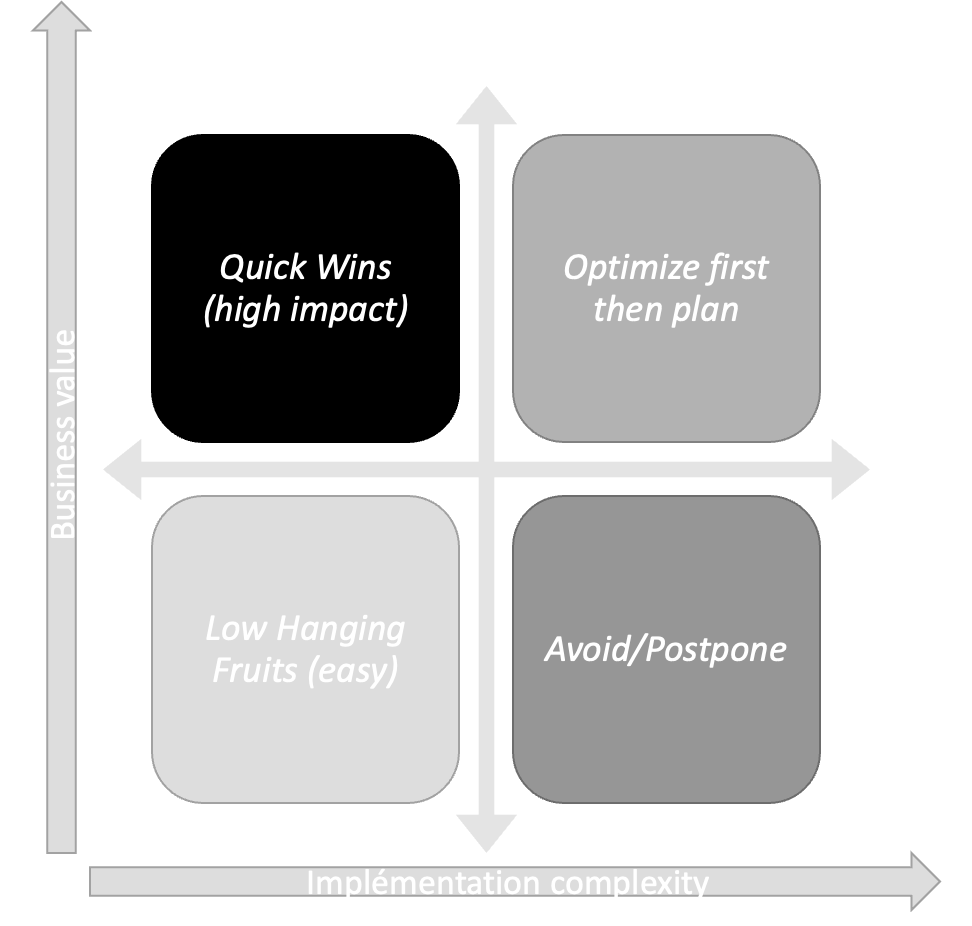
Process that has high automation benefits and low implementation complexity should be the top priority for RPA implementation.
Criteria for evaluating automation opportunities
| RPA implementation | Low Complexity | High Complexity |
| High Benefits | Quick Wins (high impact): ease of implementation & many measurable benefits.Action: evaluate the processes strategic impact and operational need to prioritize implementation. | Optimize first then plan:reduction of operational variability & increase execution efficiency.Action: prioritize to increase reach and impact of automation through expanded standardization. |
| Low Benefits | Low Hanging Fruits (easy): team empowerment and enablement of complex solutions delivery.Action: develop RPA skills incrementally. | Avoid/Postpone:extensive process transformation and lack of measurable benefits.Action: monitor and evaluate business strategy and requirements. |
Implementation complexity
The following questions help assess implementation complexity:
- Is the process eligible for automation?
- Is the process digitized?
- Is the process stable?
- Is the process structured?
- What is the effort required for automating the process?
- How many systems the process accesses?
- Is the process fully established and defined?
- Has the process a low exception rate?
Automation benefits
The following questions help assess automation benefits:
- Is there is a time benefits?
- Has the process a high transaction value?
- Is there is an organizational benefit?
Using these criteria, the most appropriate processes for automation can be selected, allowing the organization to maximize the benefits of this technology.
Access our article library to discover more inspiring content.
 François Rouhban