
The infrastructure required for RPA depends on the type of automation and the tools used. However, here are some commonly required infrastructure components.
Software Architecture
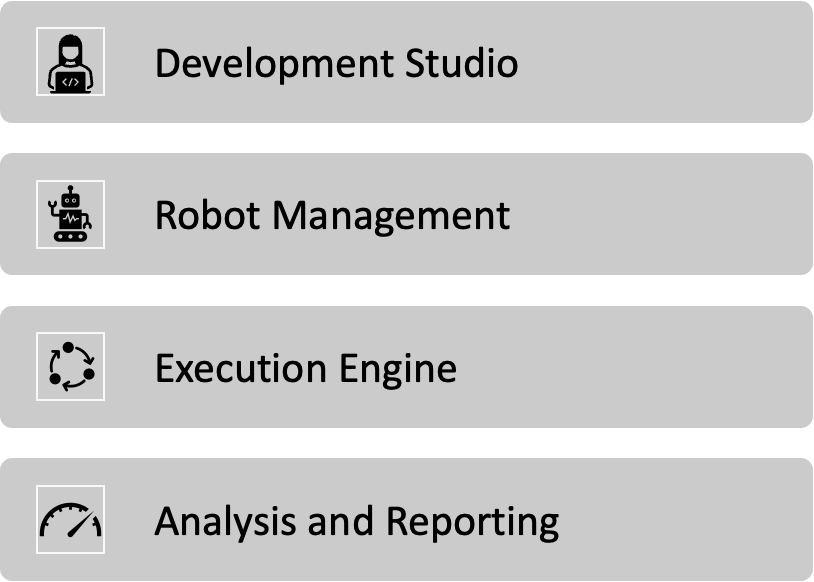
- Development Studio:
- This component is the interface where developers create, test, and deploy software robots.
- The Development Studio often includes a visual editor for creating automation workflows.
- Robot Management: This component manages the software robots themselves, including their deployment, scheduling, monitoring, and error handling.
- Execution Engine: This component executes automated tasks according to the instructions defined in the workflows, interacting with target applications and systems.
- Analysis and Reporting: This component collects data on the execution of automated processes, provides analytics and reports to assess the performance and efficiency of the robots.
Hardware Architecture
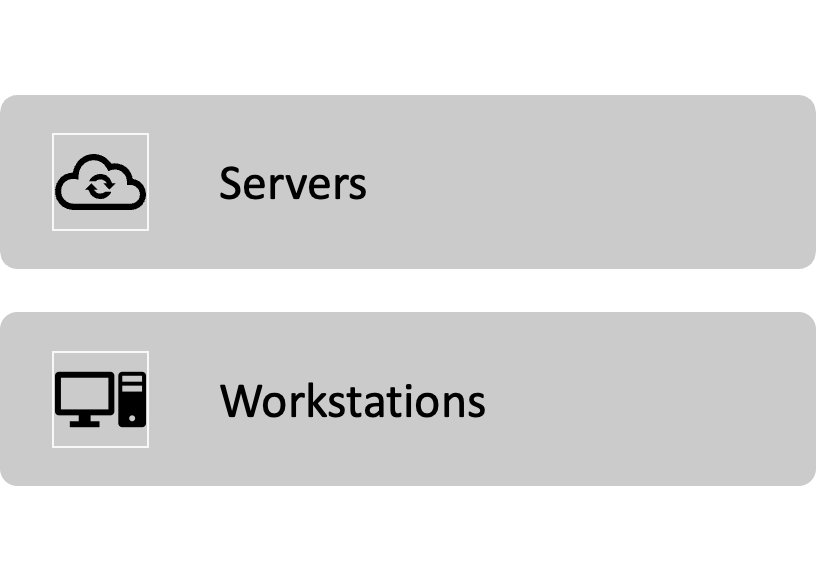
- Servers:
- Servers are used to host the software components, including the development studio, execution engine, and databases needed to store data and configurations.
- Many RPA solutions offer the option to use a cloud infrastructure to host the software components and deploy the robots, providing increased scalability and flexibility available on:
- AWS,
- Microsoft Azure,
- Or Customer Datacenter.
- Workstations: Workstations are used:
- By developers to create and test automations,
- As well as by software robots to execute automated tasks.
In summary, the infrastructure for RPA needs to be robust, flexible, and secure to effectively support automated processes within the organization.
Feel free to browse our content to continue fueling your curiosity and knowledge.
 François Rouhban